Punch Up: “To Me My ❌-Men”
Chapter Six:
1983
January, March, May, 1983 Dazzler No. 26-28 by Springer, Jusko, Sienkiewicz, Colletta, Yanchus, J. Chiang, Fingeroth + Macchio
Mixtape tracks: Blinder By a Lie by UFO; Sunday Bloody Sunday by U2; & Age of Consent by New Order
Chapter 6 in to me my ❌-Men where Alison has a flashback which bleeds into a dream which bleeds into reality which is that Angel is bleeding on the carpet.
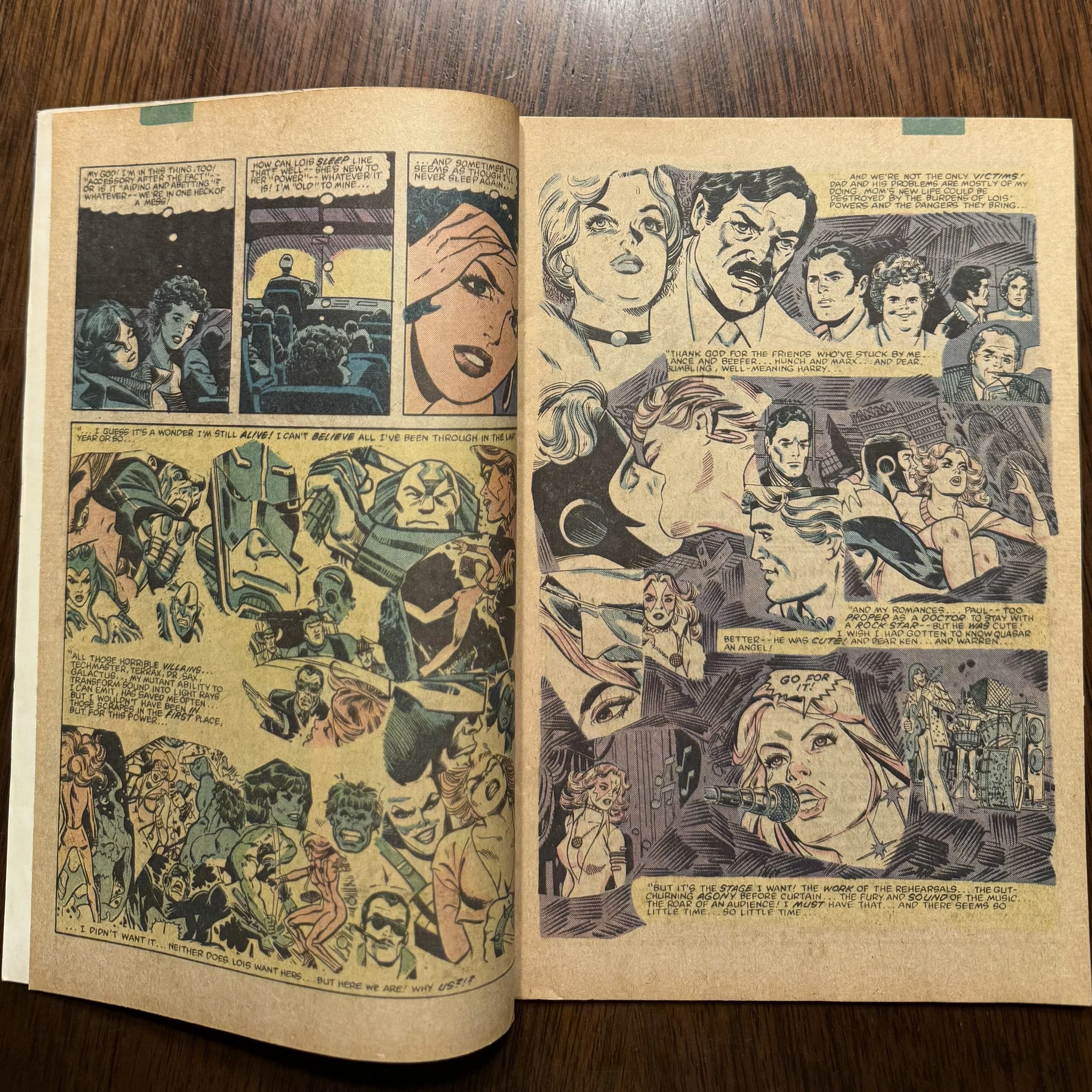
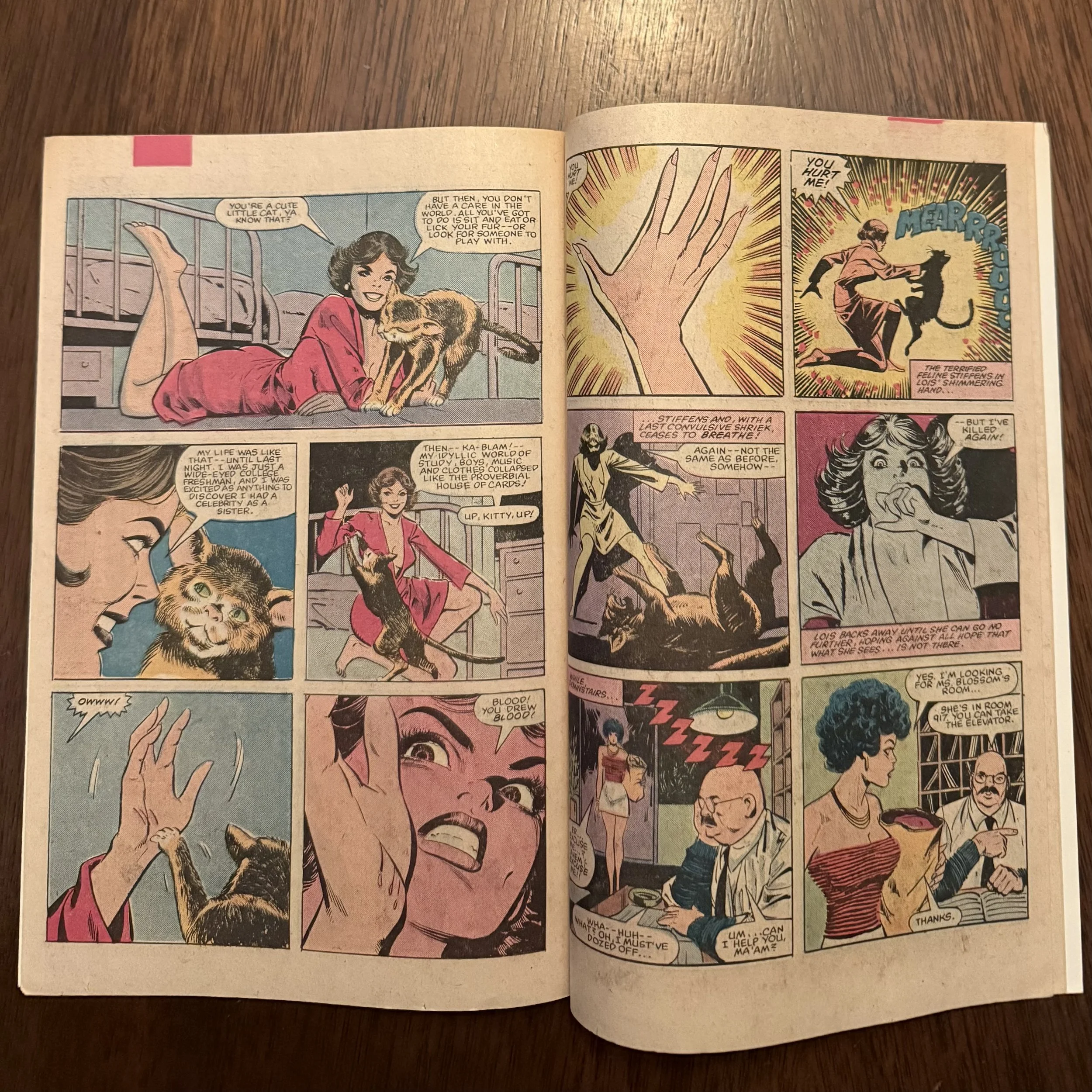
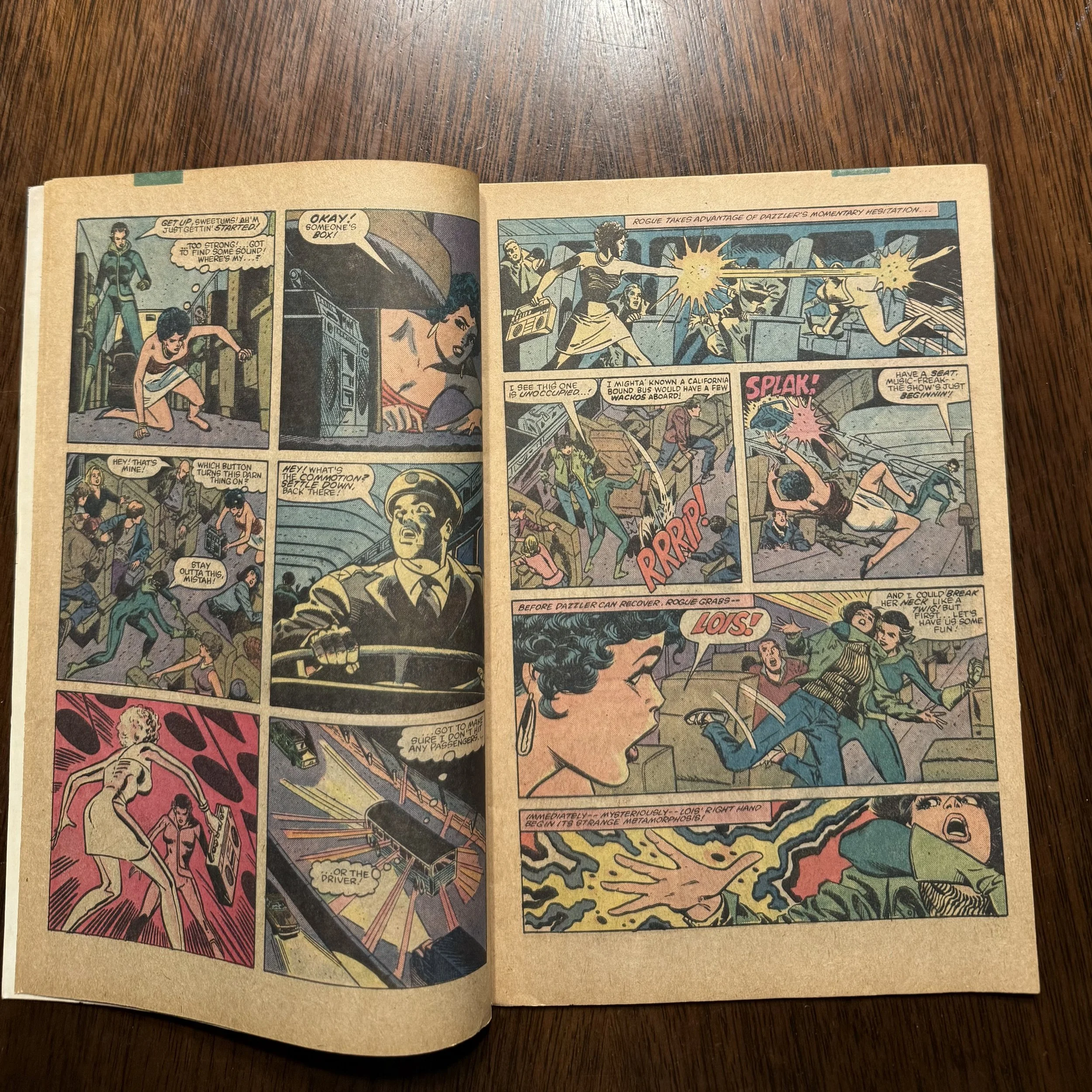
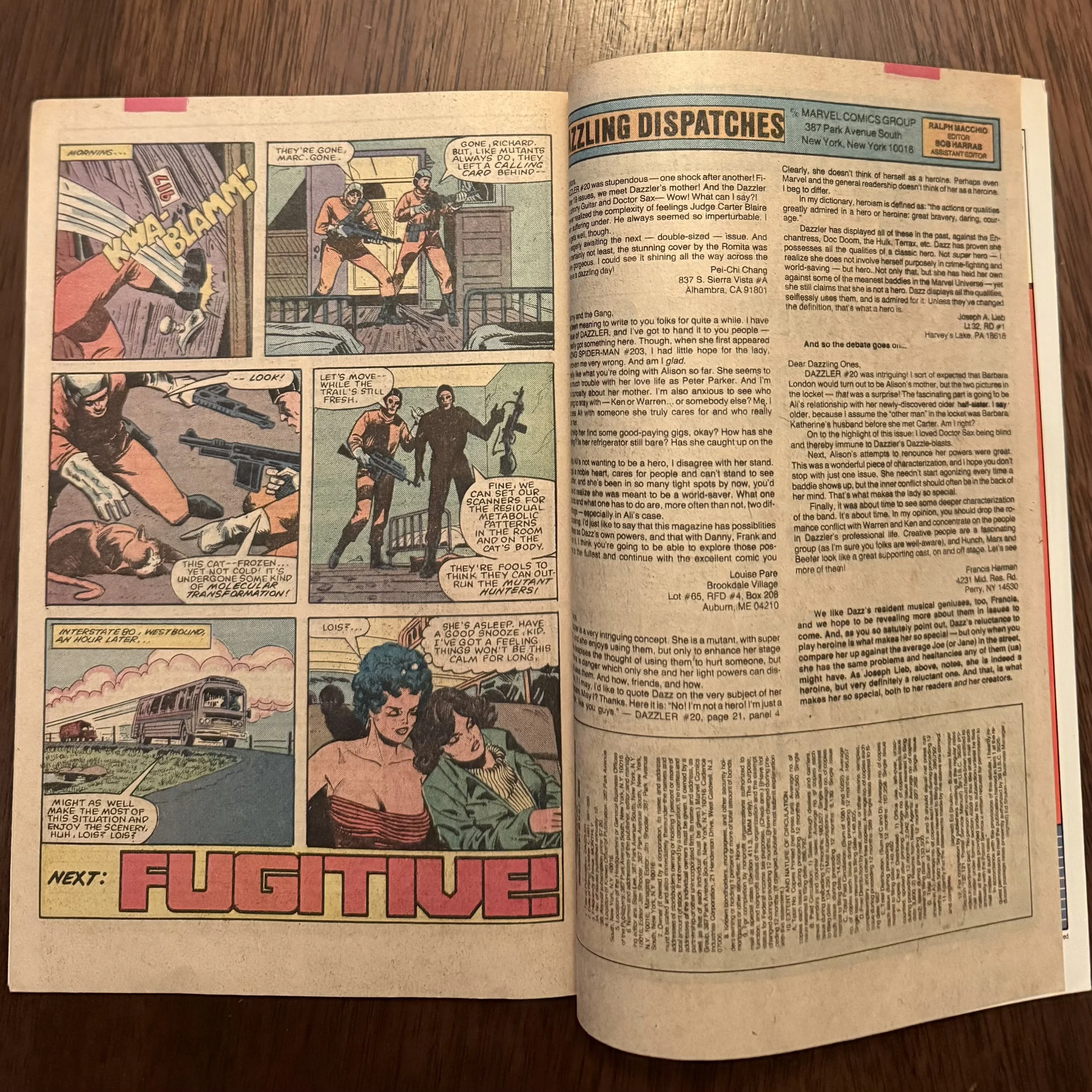
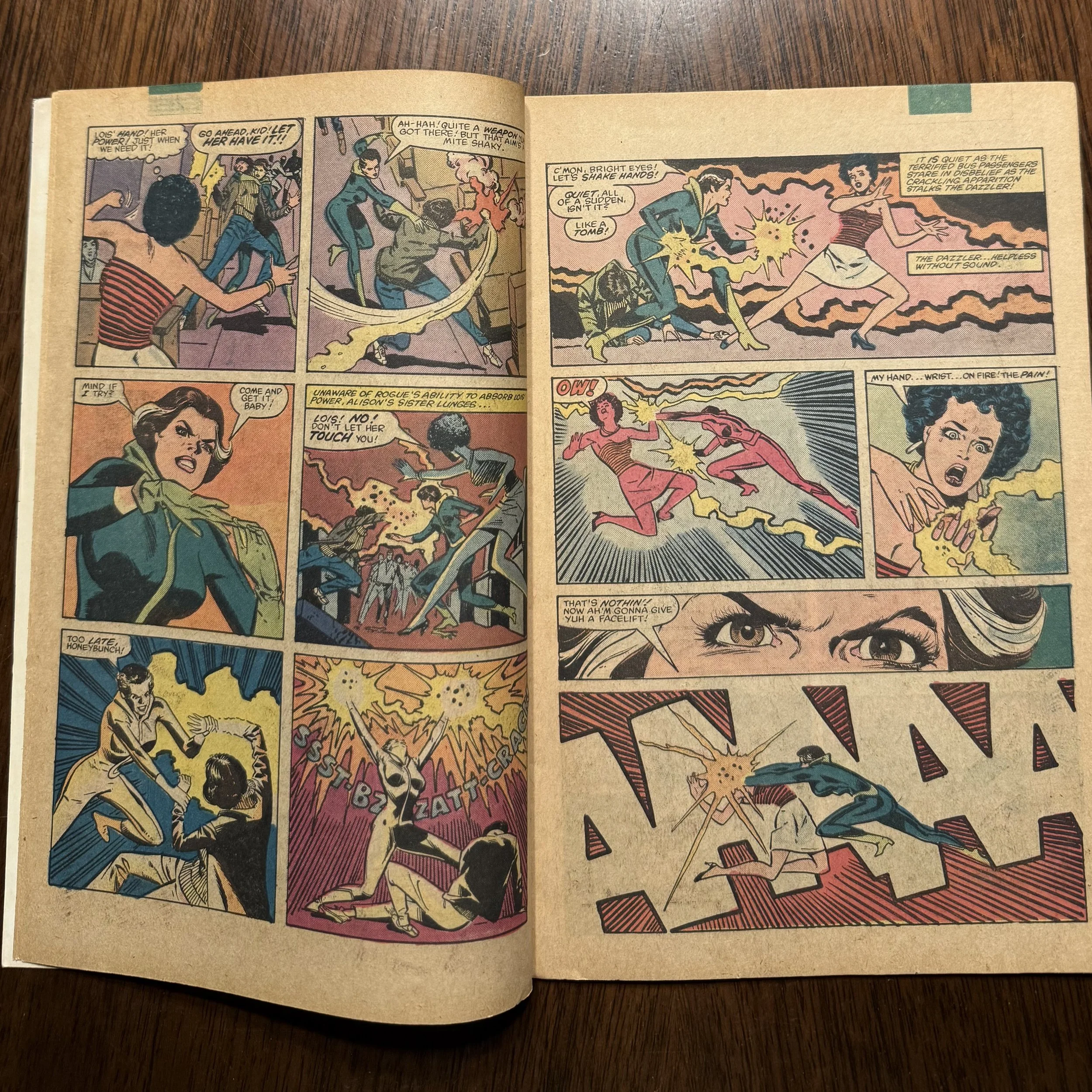
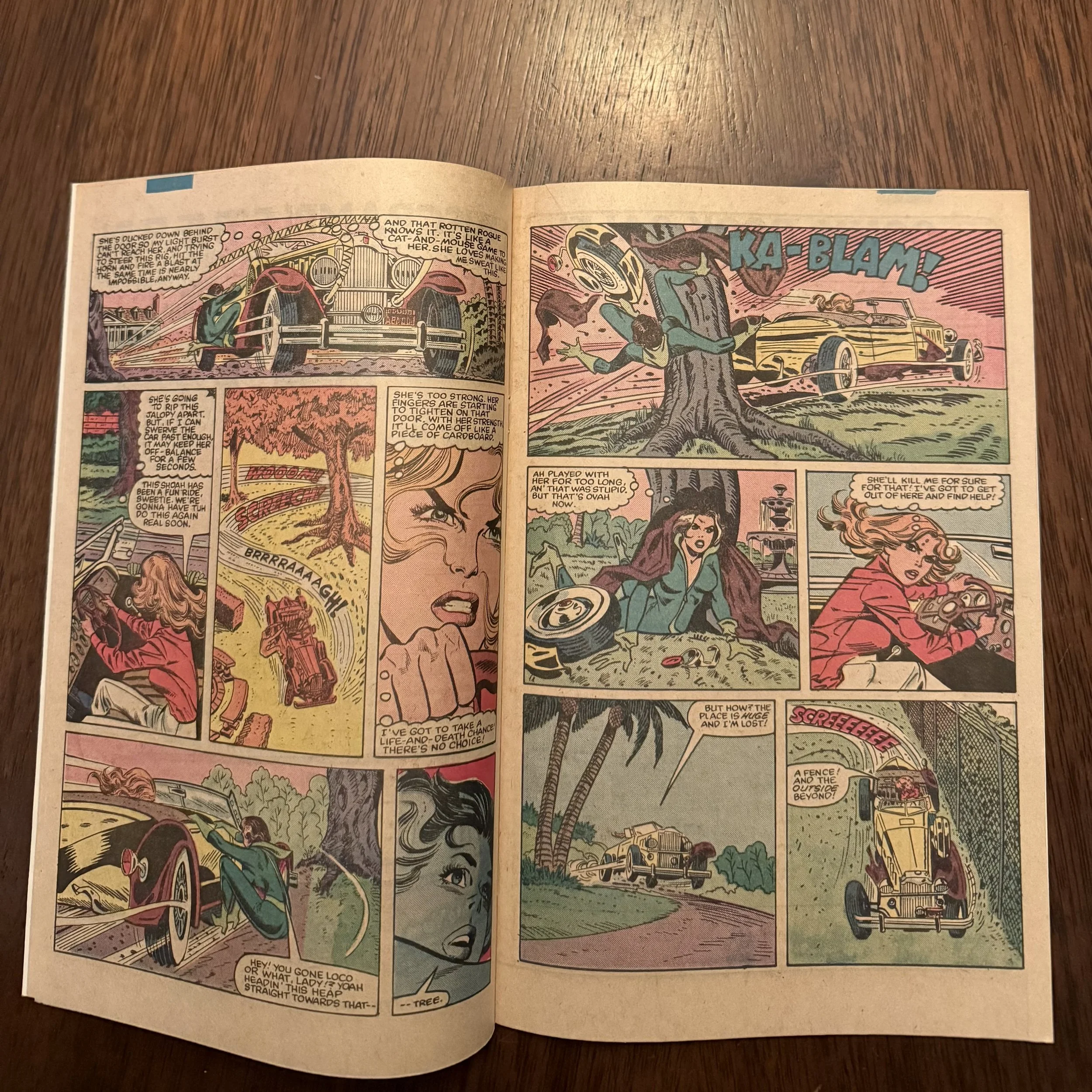
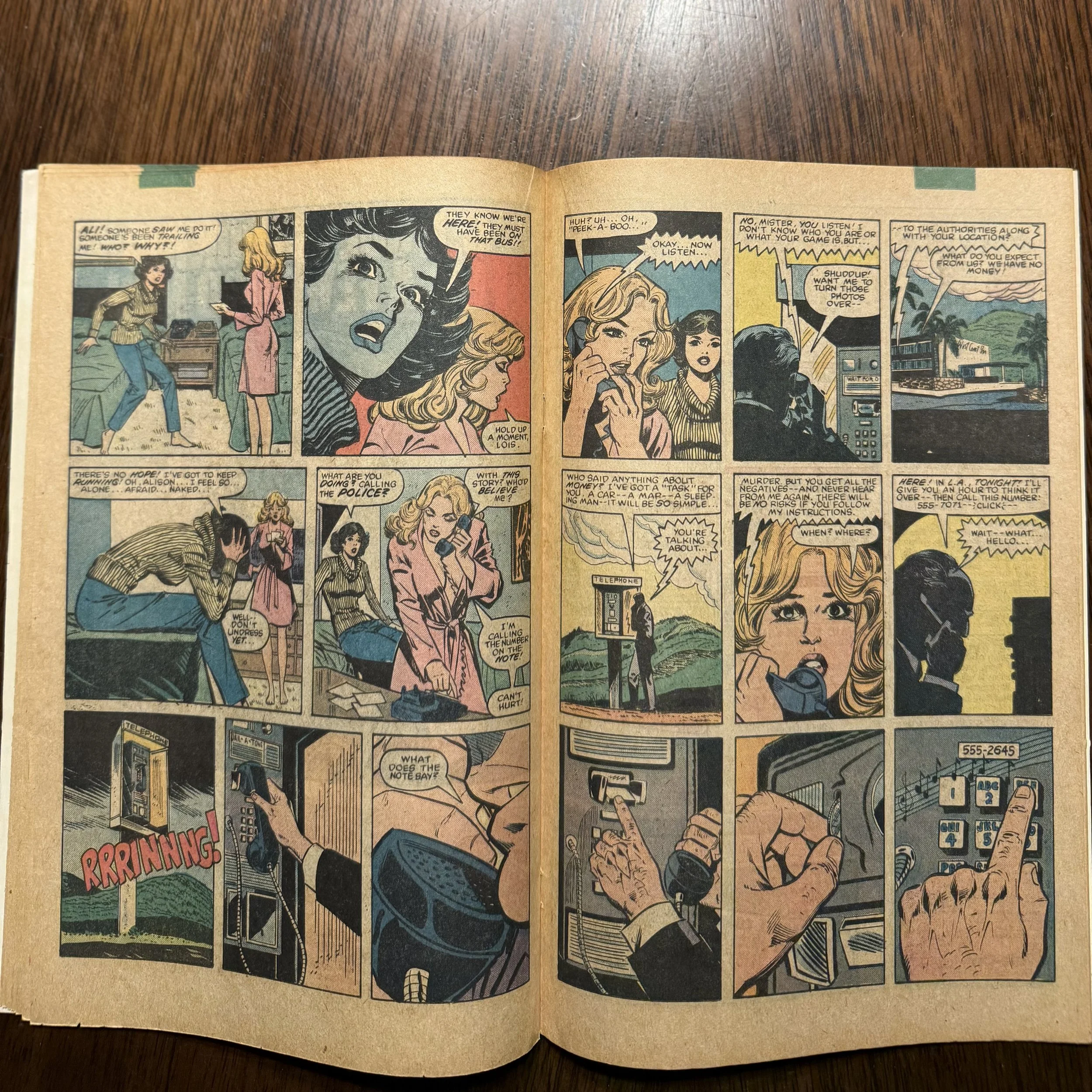
Previously on “to me my ❌-Men”…well relevant to this moment…Angel has flown off to see his girlfriend again and Kitty, Ororo, and Jessica Drew last hung out with Alison after a show. Soooooo….
It would be news to find out that she is on the run with her sister who murdered someone, as can happen with the early stages of mutations.
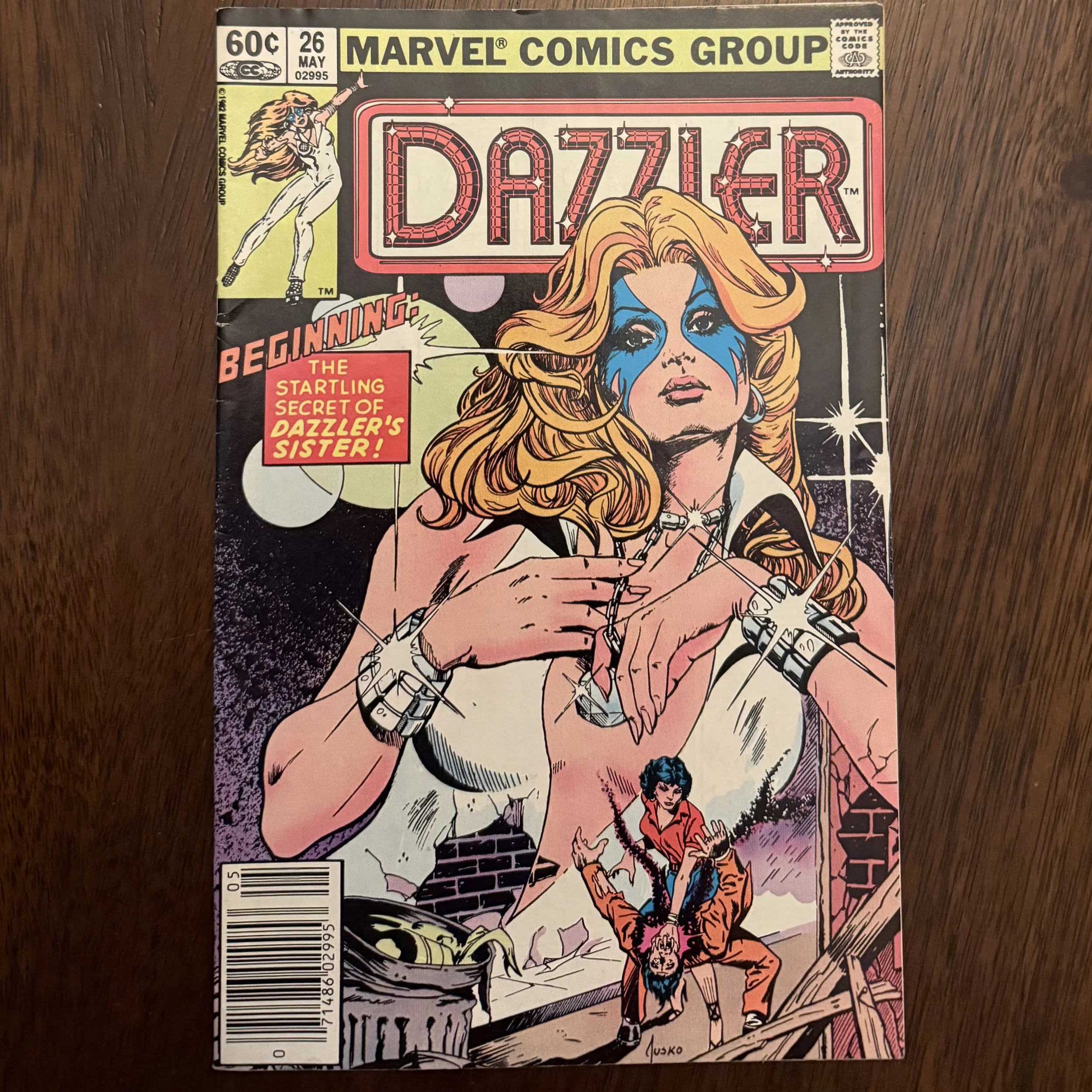
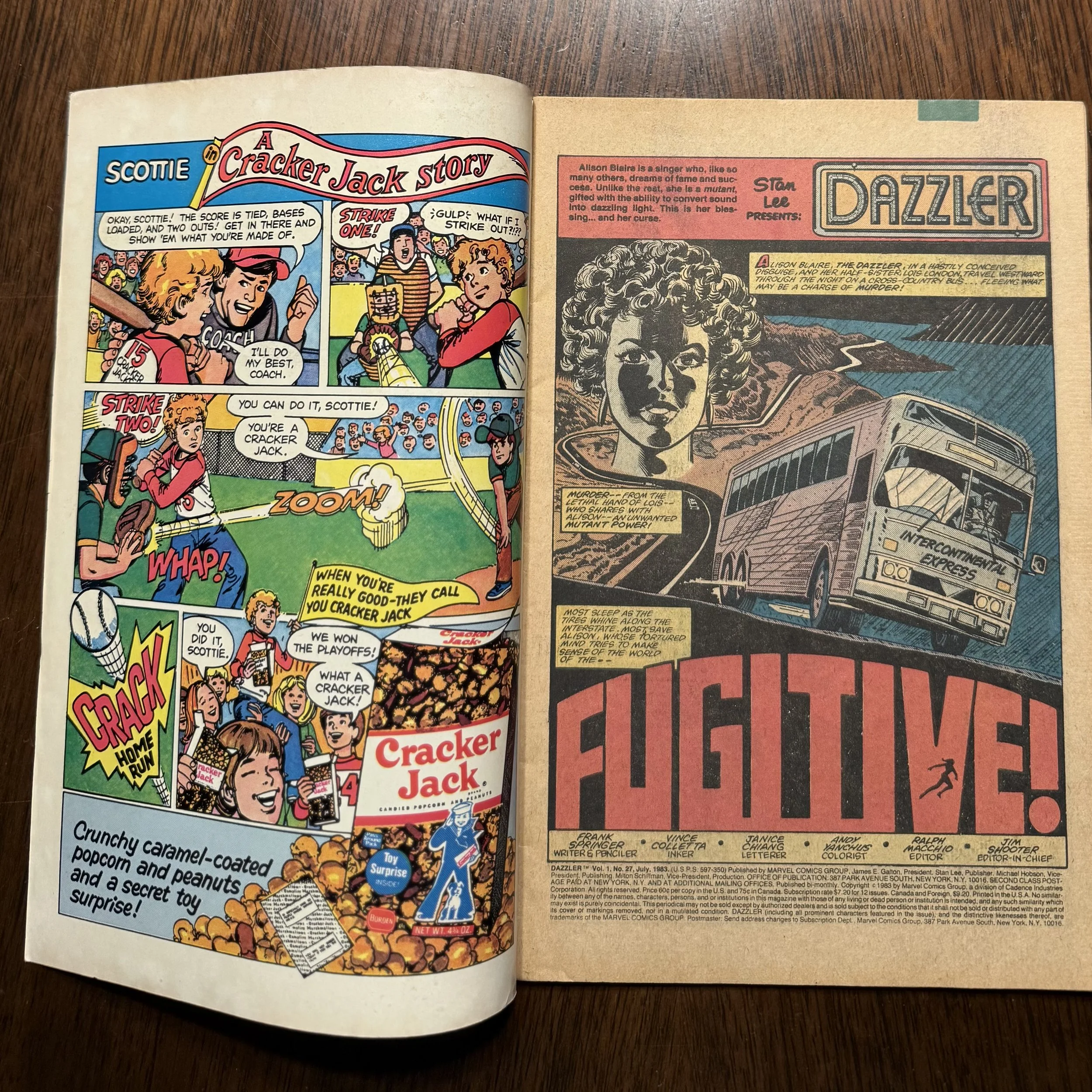
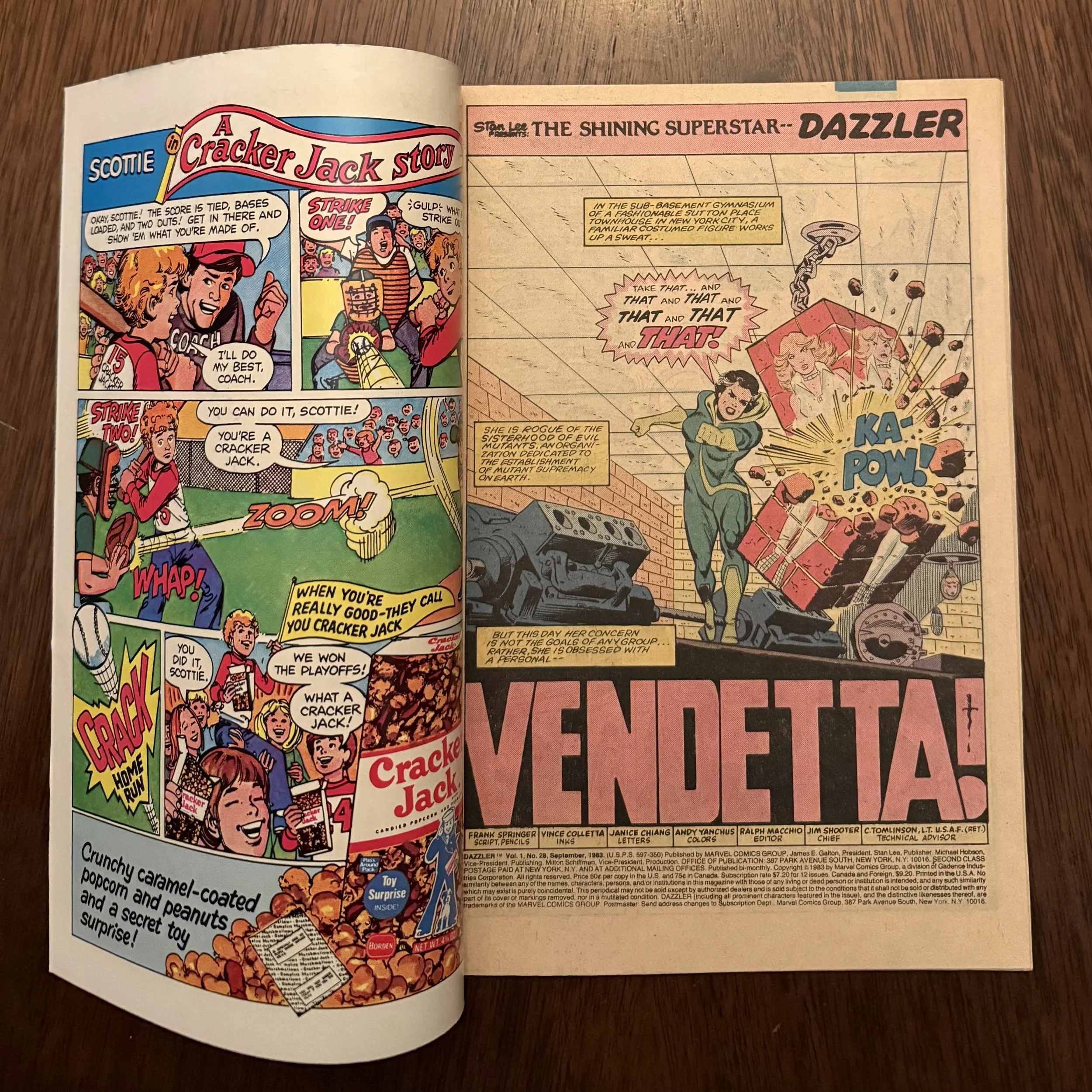
Joe Jusko reminds us that the early 80’s were firmly part of the 70’s Aesthetics. Decades don’t end overnight. This disco fashion sense of Alison, and the scratchy marks of ink make an illusion of realism that erodes when our eyes escape her face. The lettering provides a precise compliment to the vibes. Janice Chiang’s colors holds the illusion as long as the line work does. Turn out this is not a magazine, or French. It is an American comic book.
We are promised a “beginning,” “the startling secret of Dazzler’s sister,” which is spoiled here on the cover.
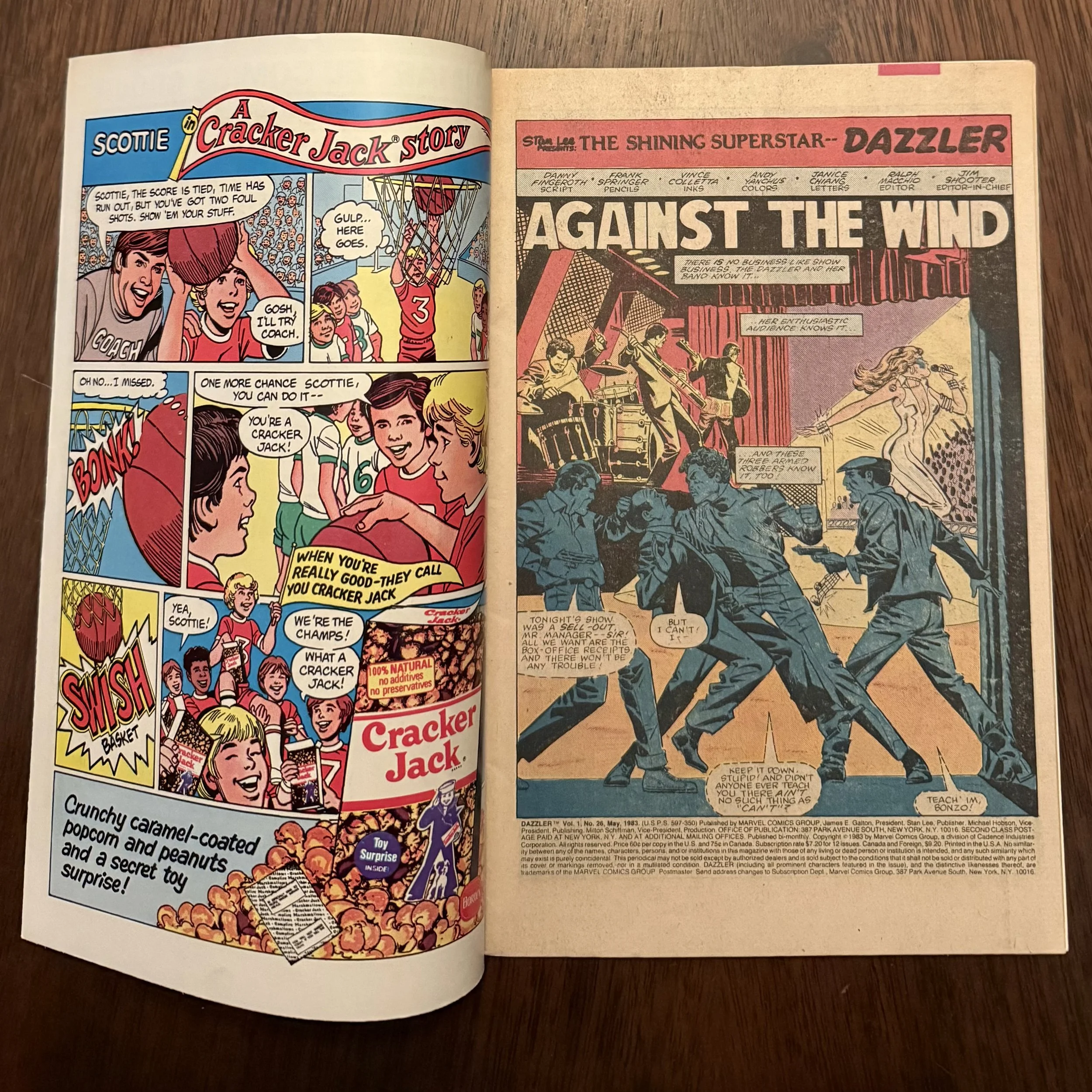
AGAINST THE WIND
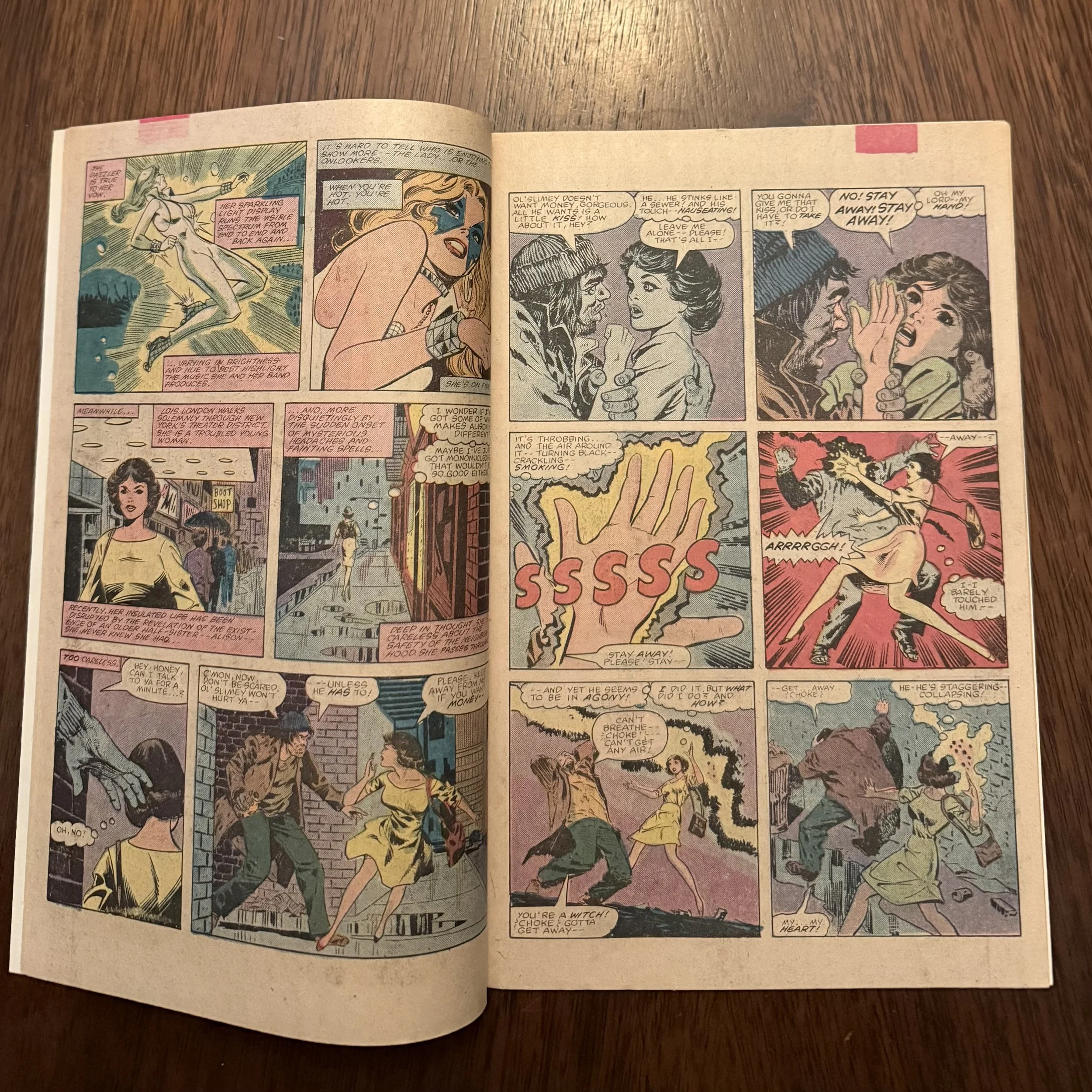
Beefer, Hunch, Marx, and Alison are on stage in the well rendered background, as violence at gun point commences in the wings stage right. Mr. Leland is in the hands of Bonzo and gang…they are there for the box-office recites. Thanos has nothing on these goons.
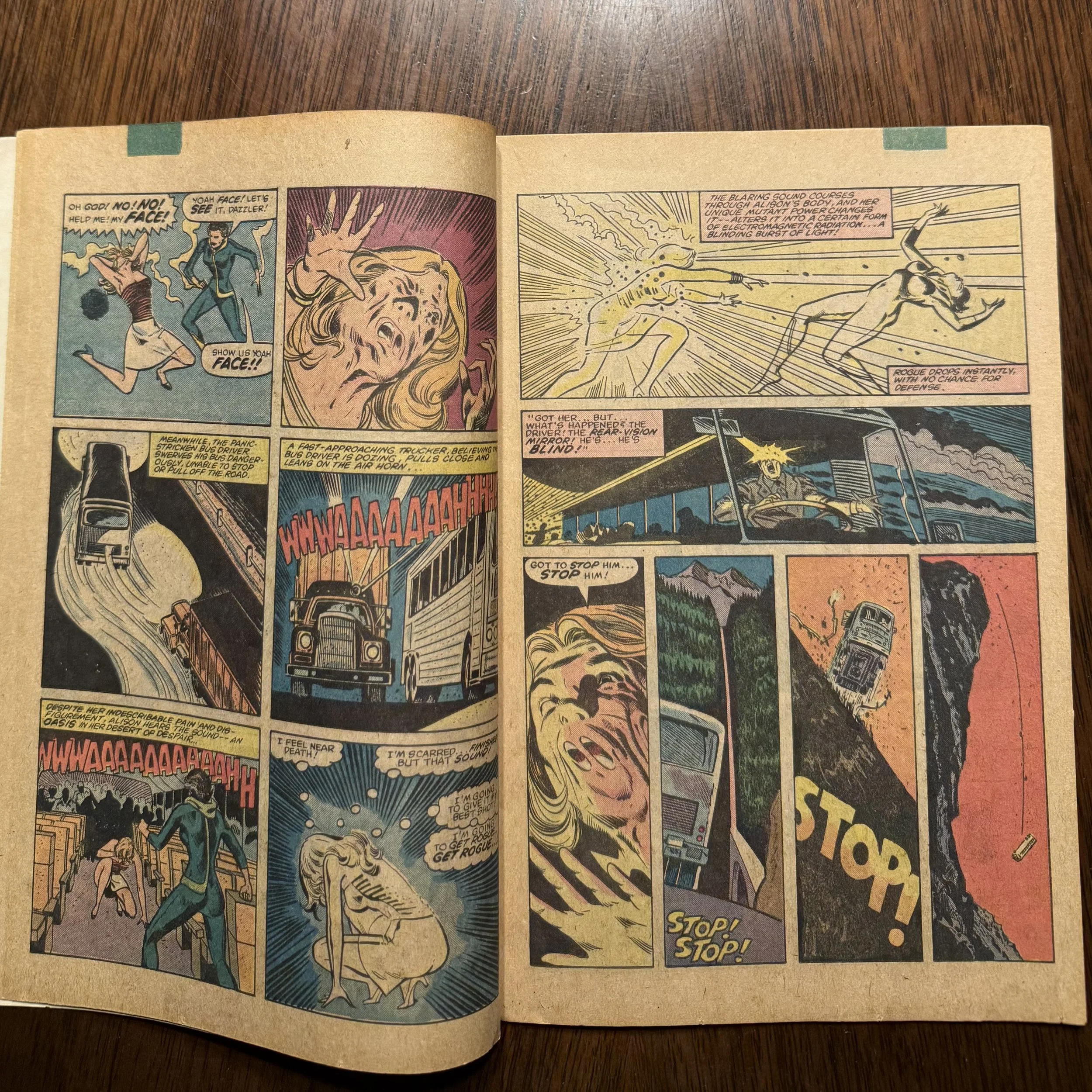
Alison tells her band to turn it up a notch, as she noticed the events in the shadows. This distracts from said events, and feeds her mutant power, as she converts the kinetic energy of transduce sonic vibrations into light (visuals, lasers, photon beams, etc…), and stops the robbery.
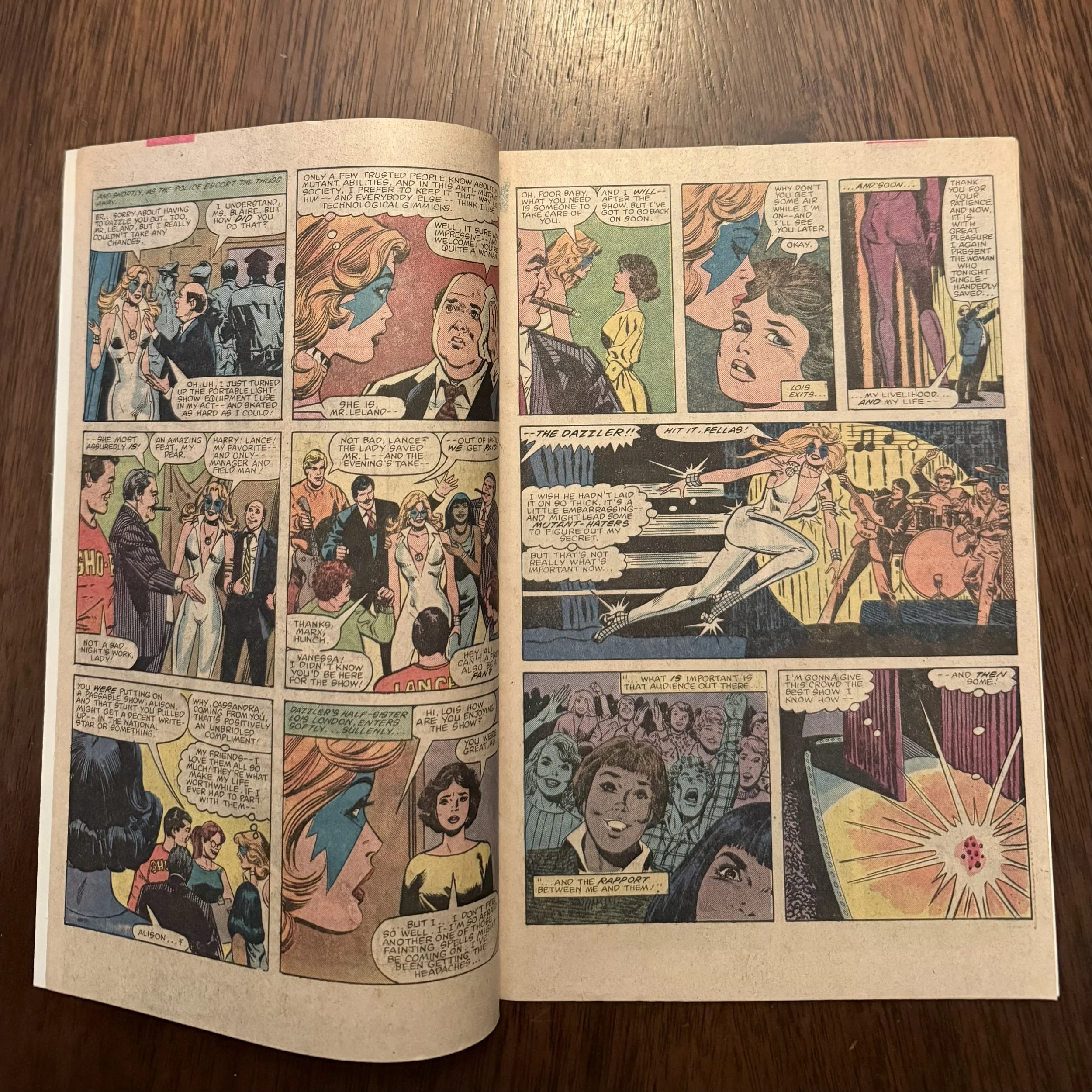
The before the encore and the pre-after party includes a Scooby-Doo explanation to Mr. Leland, and Alison is joined by the rest of her entourage; talent agent Harry Osgood, his secretary Cassandra Ferlenghetti, body man/manager Lance Steele, and fellow performer Vanessa Tooks, when Lois London approaches. Lois is clearly the focus here. Alison’s half-sister is new to the scene it seems.
Lois heads out as the band returns to the stage to finish out the set. In the ally Lois is aggressively approached by Robert “Slimey” Smith (not the musician), and their desperation and mental status, combine for a tragic outcome. Triggering her mutant abilities for the first time, and releasing upon Robert, her “Death Touch,” which disperses his life-energies, as their skins connect.
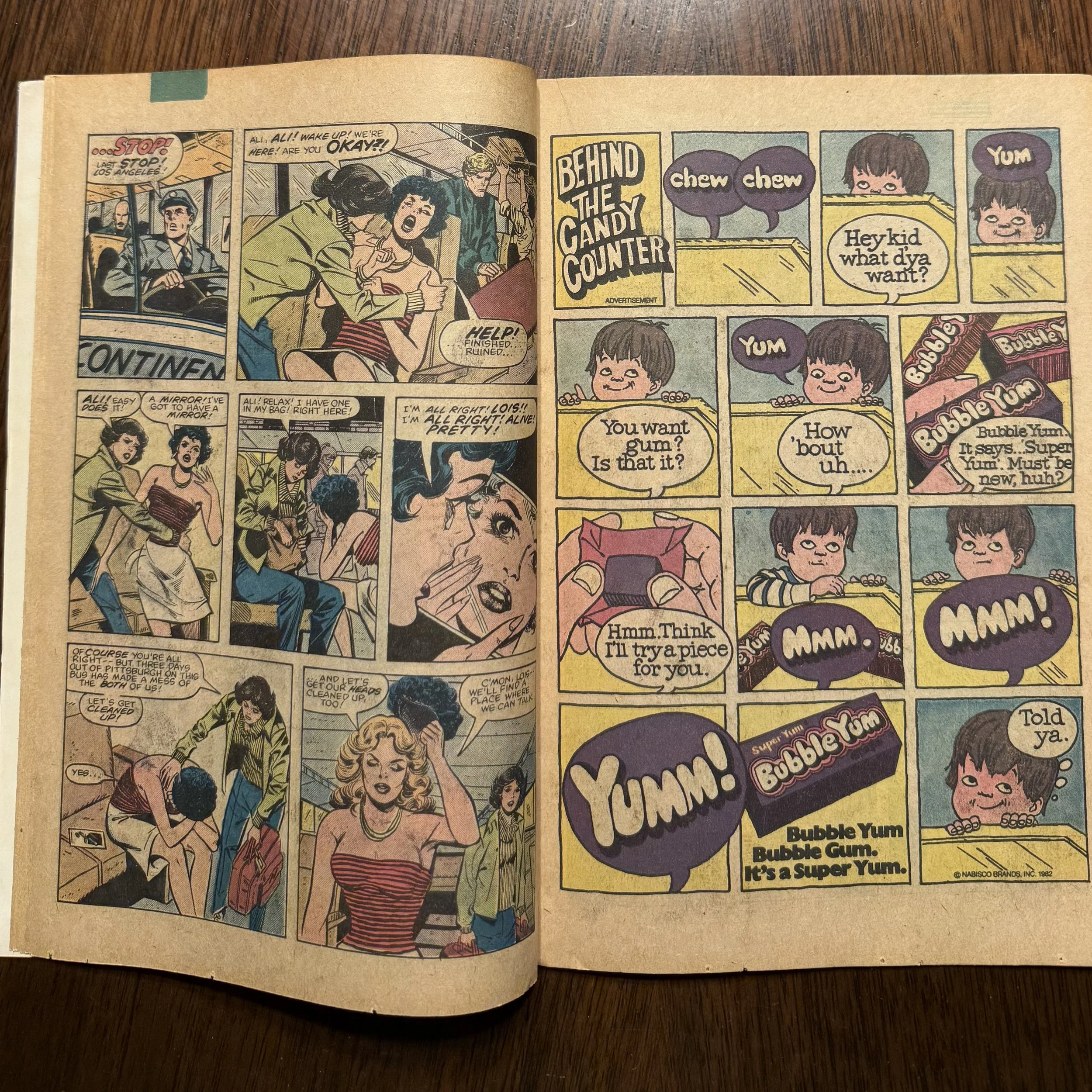
This is a romance comic in style, lineage, and marketing. It lives within a superhero genre world. The history of romance comics and superhero comics are the same history. Like the horror, which has always had its own link to romance, beyond medium, superhero comics are an intersection of all genres, that can lean into corners of sci-fi, comedy, tragedy, romance, horror, the avant-garde, etc… Within this breeds confusions about intent (overvalued in my experience), and expanded opportunity in individual interpretations (undervalued in my experience). From the beginning of “to me my ❌-Men,” we wrestle with adults (8-teens, 9-teens, 20’s, 30’s, 40’s, 50’s, 60’s, perhaps even worse 70’s etc…) depicting kids (13-17) in unsettling, but not necessarily entirely unrealistic contexts. Within this, we can and do focus on who made the work. They are responsible for its existence and they are reflecting many shared realities and fantasies. However, it really is a utility for the audience. And in this framing of the equation, it is on us to wrestle with what we gleam from the art and what it means.
Our best guess is Lois’ is 19 here. But even if she was younger, it would be a mistake to jump to conclusions of form. This is cartooning. Exaggerations are often utilized. However, a voluptuous form is not a sign of age. And Danny Fingeroth has set this off as her wellbeing to be of concern to Alison, as if she is guardian to a kid in this moment, and not in the relationship of equity between the two on maturity. How we read this, exists on a spectrum, and it is up to the individual to put themselves into these contexts and utlise them within them. It is my hope that they reflect honestly and with empathy within themselves here.
Had I been reading this in 1983, at age eight, it would have been part of the awakening comics I read. Like Elf Quest was for me in 1984. Had I been reading this in 1984, 1985, 1986, or 1987, it would have contributed in someway to those 9, 10, 11 year old developmental feelings on form. However, the function of this comic is that I am really paying it attention at age 50, with a daughter who is nearly Lois age. One who is out in this world. I am also, one who was raised around unhoused folks, who struggled with their mind as part of their own human conditions. So my empathy for Robert and Lois are equitable and they represent all at once a care for them, for those who I have known, for those who I do not know, and for myself. Perhaps this the benafit and privilege I had as a teen myself. Where on balance my friends were mostly girls, who faced extraordinary challenges in a society and culture that put on them contexts both real and fabricated that Lois represents and prepared me for fatherhood, as well as, informed how to manage my own teenage hormones and contexts.
The comic itself is simply ink on paper. Through its entire process, until it transitions to light, 1 & 0’s on the computer a generation later. Even then it remains Art that has a utility to be a safe space for the individual to interact and utilize it who they wish. This is despite those who rally against the medium, it seems always. In the gutter between panels, in the space between lost or passed over issues, in the individuals interpretations between elements, there is equity in storytelling. It is absolutely okay and safe for you to interact with this pulp fiction how you do. It is none of our business. I am here to share you mine. And I am finding a complex and reflective moment in this two page spread, that is on theme with “to me my ❌-Men,” and relevant to the trajectory of my life half or more over. Especially as it pertains to those who have mattered to me in it.
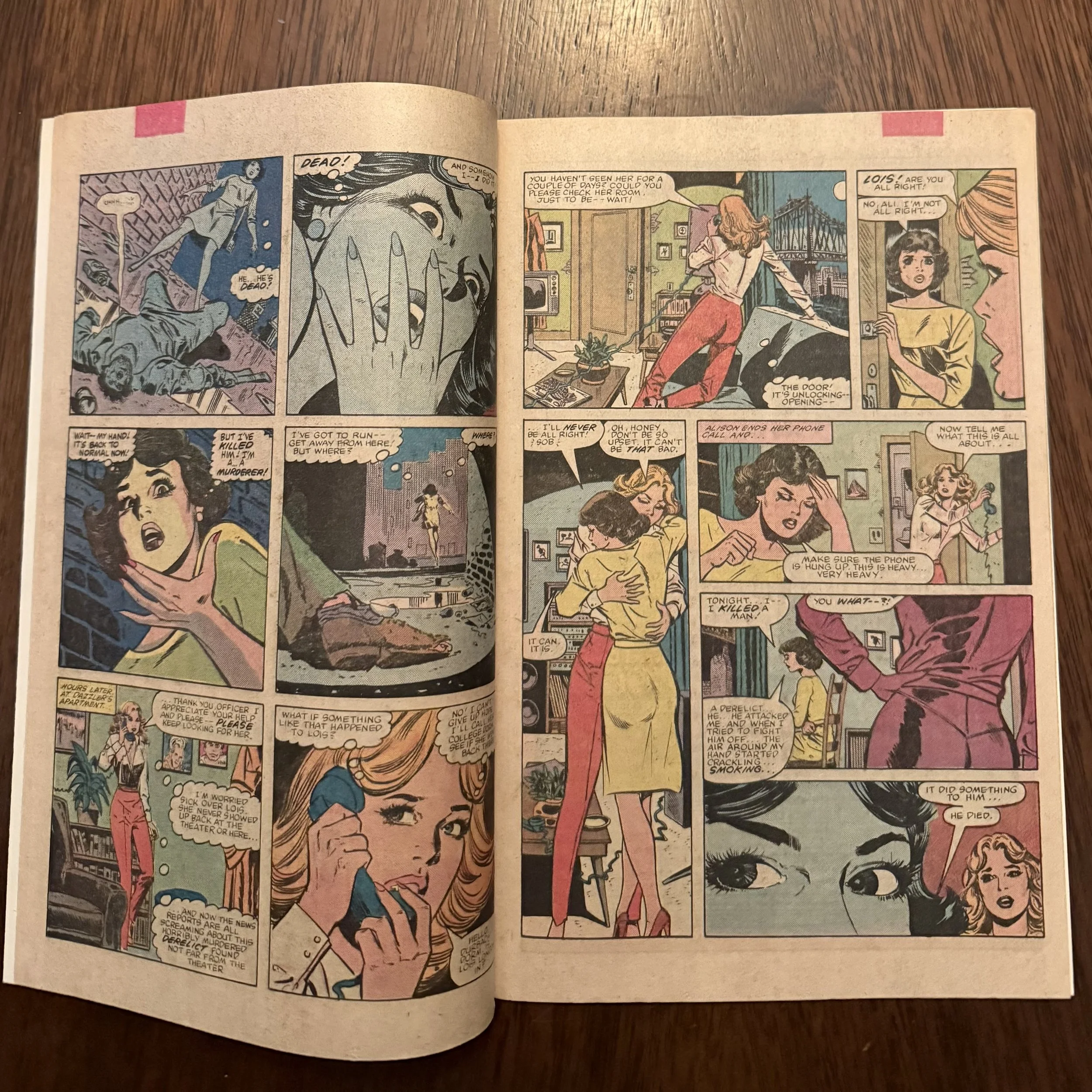
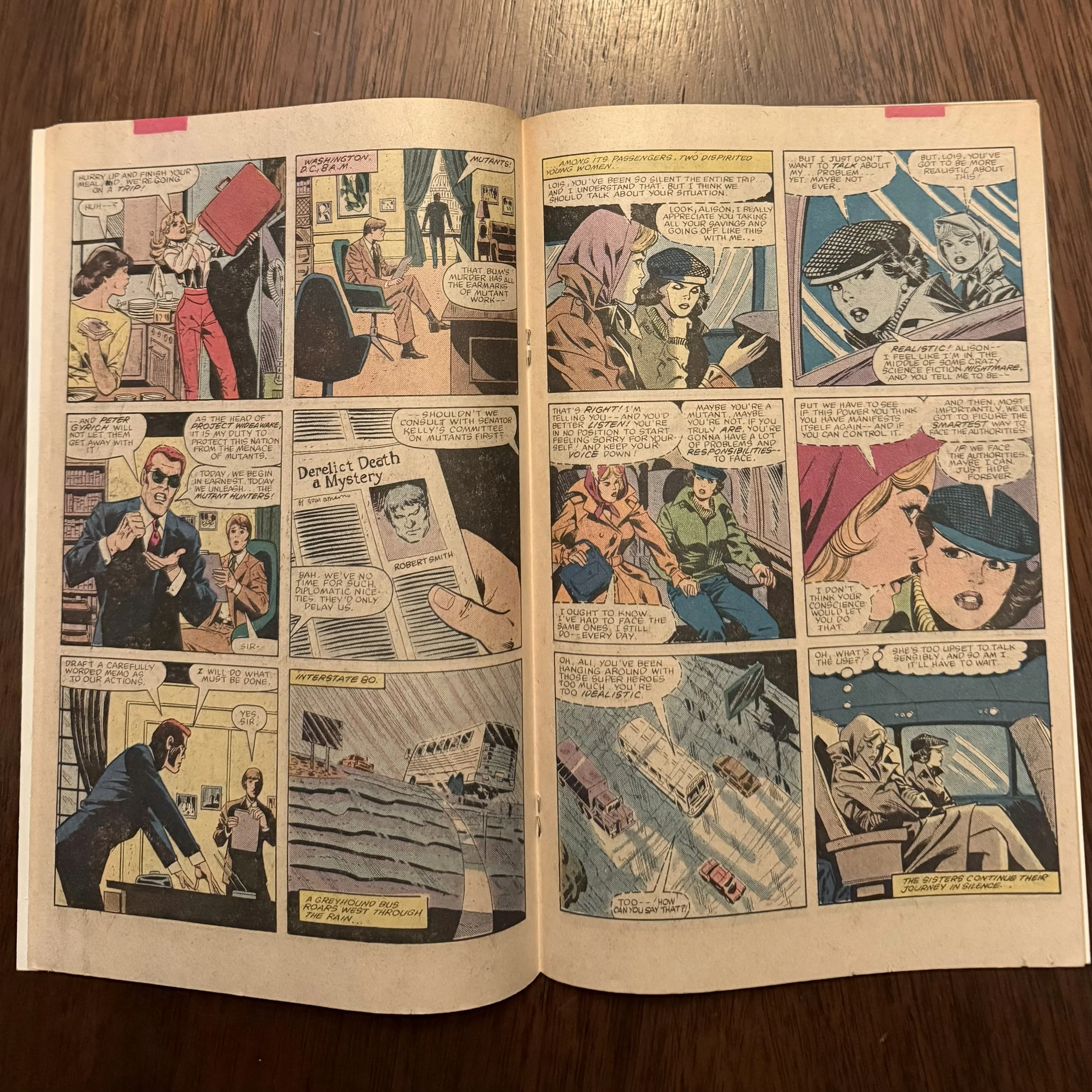
My professional reaction to these twelve panels played out it they represent quality professional comics cartooning of a specific time and place. They work.
This doesn’t change at page turn, as the romance comic aesthetics cary us from death and horror of what has just happened in Lois’s first mutant moment, to Alison who is speaking with police looking for her sister.
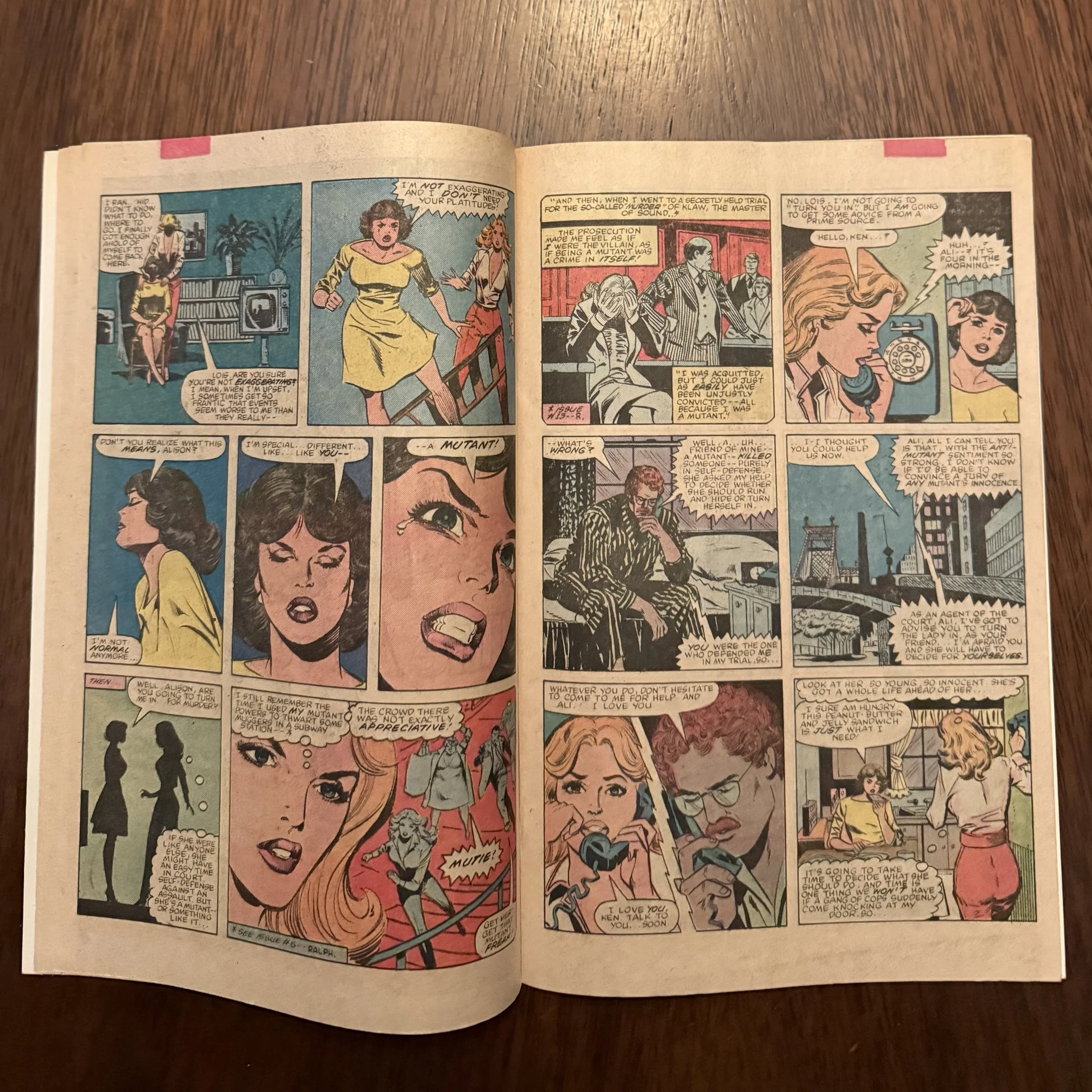
Lois shows, and tells her sister exactly what happened. Many storytellers take this moment to draw out the drama between sisters. Straining their relationship on trust. Not here. Here the trust is tested in a way that speaks to what Lois and Alison have. A complexity in life already lived in its beginning chapters. Aly does push back in the moment. Not wanting to jump to conclusions on what happened, and not fully taking the word of a kid. But the kid has her own strength. She is reflecting back that she knows what Aly is and in this moment is beginning to experience that for herself. An horrible opportunity for them to connect on another level as siblings.
“— like you—a MUTANT!”
This being a comic, and the less then casual relationship with the Comics Code Authority (symbol of origin story of rallying against the medium), Aly must specify in her own mind that she would recommend her sister turn herself in to the justice of the court (not the advice every American first leaps to), but because she is a Mutant, and Alison is a mutant with experience, she waffling towards not having or turning her sister in (thus representing those Americans who’s contexts tell them to perhaps not just turn yourself over to the American justice system). Alison calls her own murder trial lawyer, Kenneth Barnett. Aly was tried for murdering Klaw…and she is out touring the country…so lets check with the legal avenue first. Kenneth is like, not in today’s political climate. A central theme throughout “to me my ❌-Men.”
In this moment is a reminder of who Lois is right now. What she needs and has is a PB&J.
Page turn, Aly is grabbing a suitcase. They are running for it. Next panel:
“mutants”
Henry Gyrich, the anti-mutant boogyman, makes his first of four appearances in “to me my ❌-Men.” A throw back hater, in the traditions of Hitler. He tethers us to Marvel’s original purpose. To punch Nazis. If you have seen the Super Friends or Justice League Animated Series, think the demeanor of a redheaded flat topped Lex Luther in a governmental official suit and glasses. His teeth clenched and his sense of self and humor absent. Singularly focused on taking down Mutants, four appearances over the course of three years is plenty. While watching the Venture Bros, we get introduced and get to know some arches intimately. It’s wonderful. However, the most effective ones and the ones as most at risk of loosing their effectiveness as sources of fear, both benefit from limited exposure to light. So in “to me my ❌-Men,” The Hand, Mr. Sinister, The Adversary, Mojo, Selene, The White King, Shadow King, the architects of actual fear here, they are used on the page sparingly.
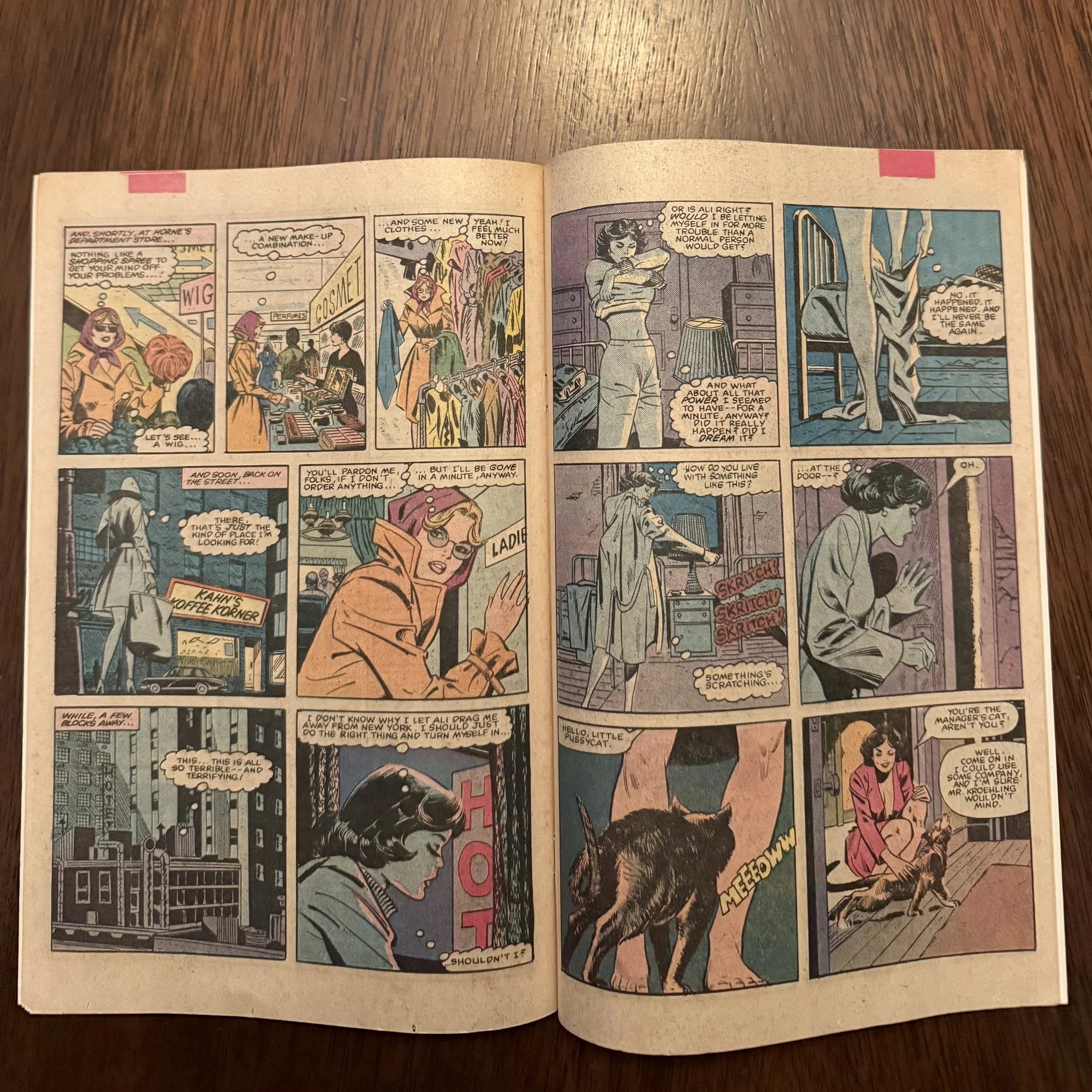
We quickly find ourselves with the sisters on a bus, having exited Aly’s Lenox Hill’s 61st Street apartment, and now headed on headed on 80, first stop Pittsburg. Alison in headscarf and Lois in Susie Myerson’s hat. Alison is to well known to be complete inconspicuous, on the streets. She is out an about collecting supplies for their run. Lois is in hiding, befriending a cat. The sisters communication is shutting down. Lois comes in contact with the cat, and the cat’s last experience in this life is the “Death Touch.”
Alison returns with a black wig and new outfit, to find her sister loosing her shit. The take the next bus out of town. Goons have tracked them to their hotel room.
I think I love this issue a bit to much.
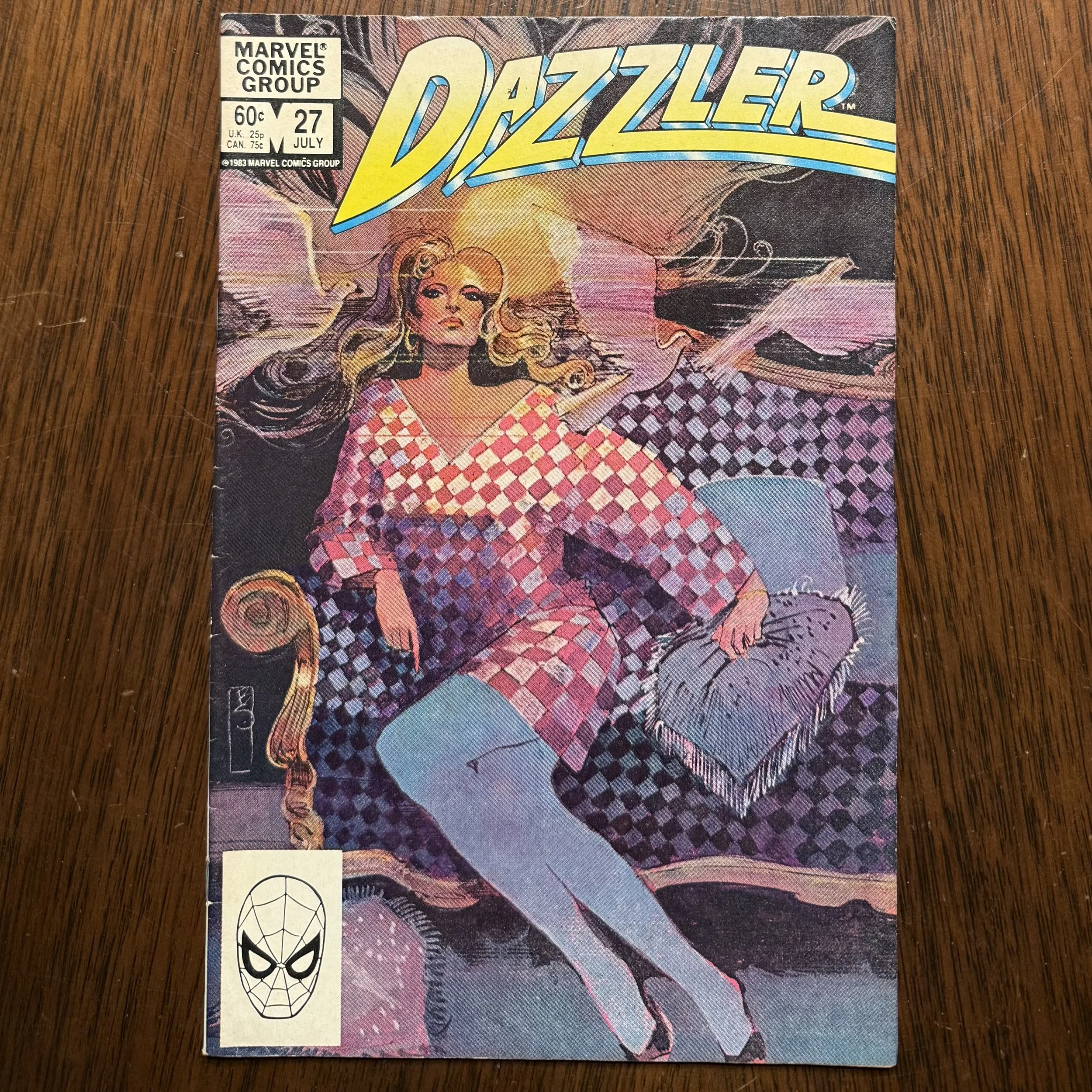
This No. 27, Sienkiewicz cover is an all time favorite. That’s the only reason I needed to include it here. But the reality is that the comic fits a handful of themes. The randomness of the spinner rack comics era. We hadn’t really had a solid romance comics aesthetic representation here and Frank Springer really captured the feel and narratives, as he has full control of the writing and penciling here, like a proper cartoonist (no shade on those who singularly craft one of our hats).
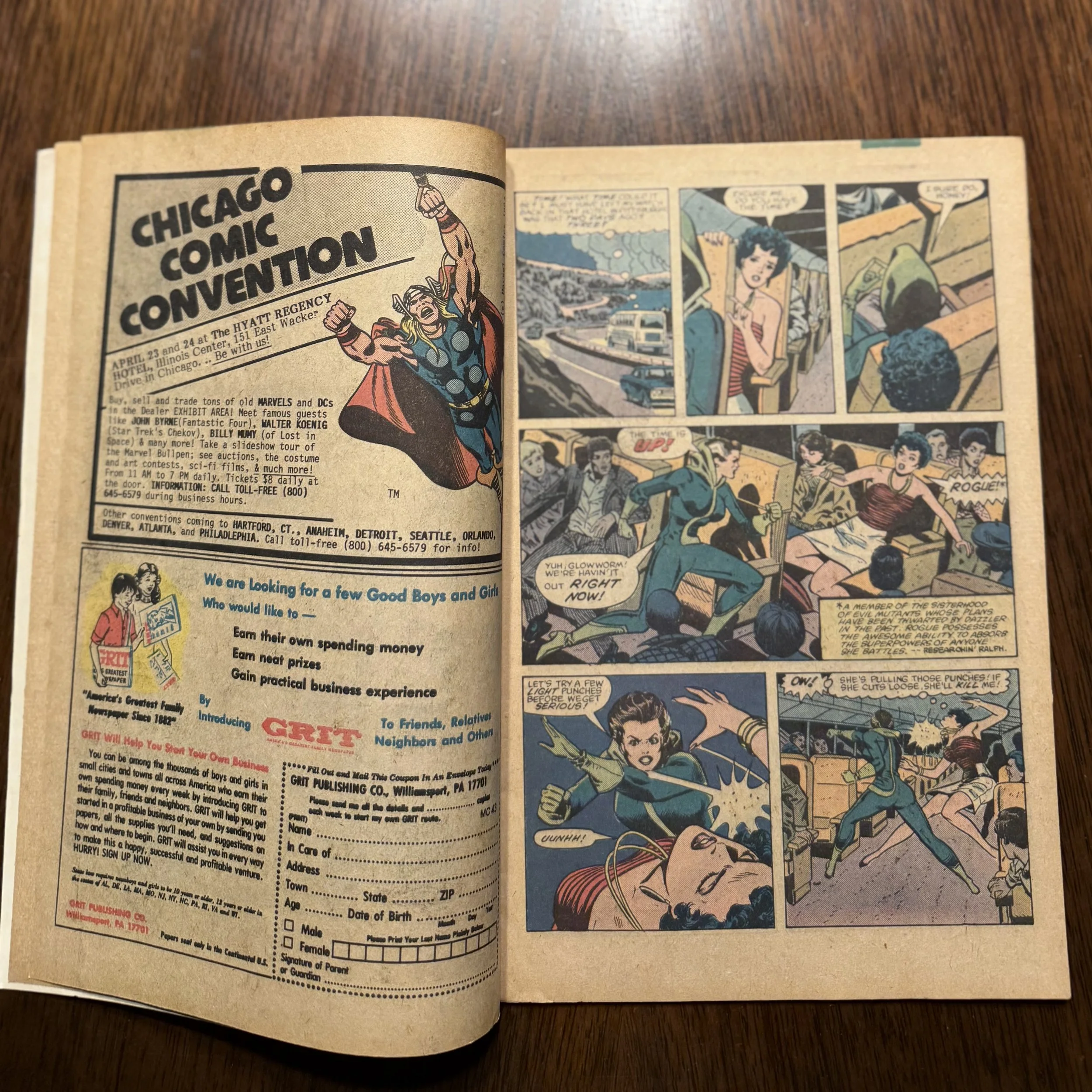
I enjoy the flashbacks sequences depiction bleeding into our first Rogue appearance. She is still a “villian” here and it plays to the campiness that fits with the romance genre. And it smartly bleeds into another narrative element that should be read. This sets up what is really going on to a point…only in the issue ends on a perfect comics note, familiar to Venture Bro fans, of an old man and Alison’s sister saying, “you!” at each other, while Angel bleeds on the rug.
And so…
VENDETTA
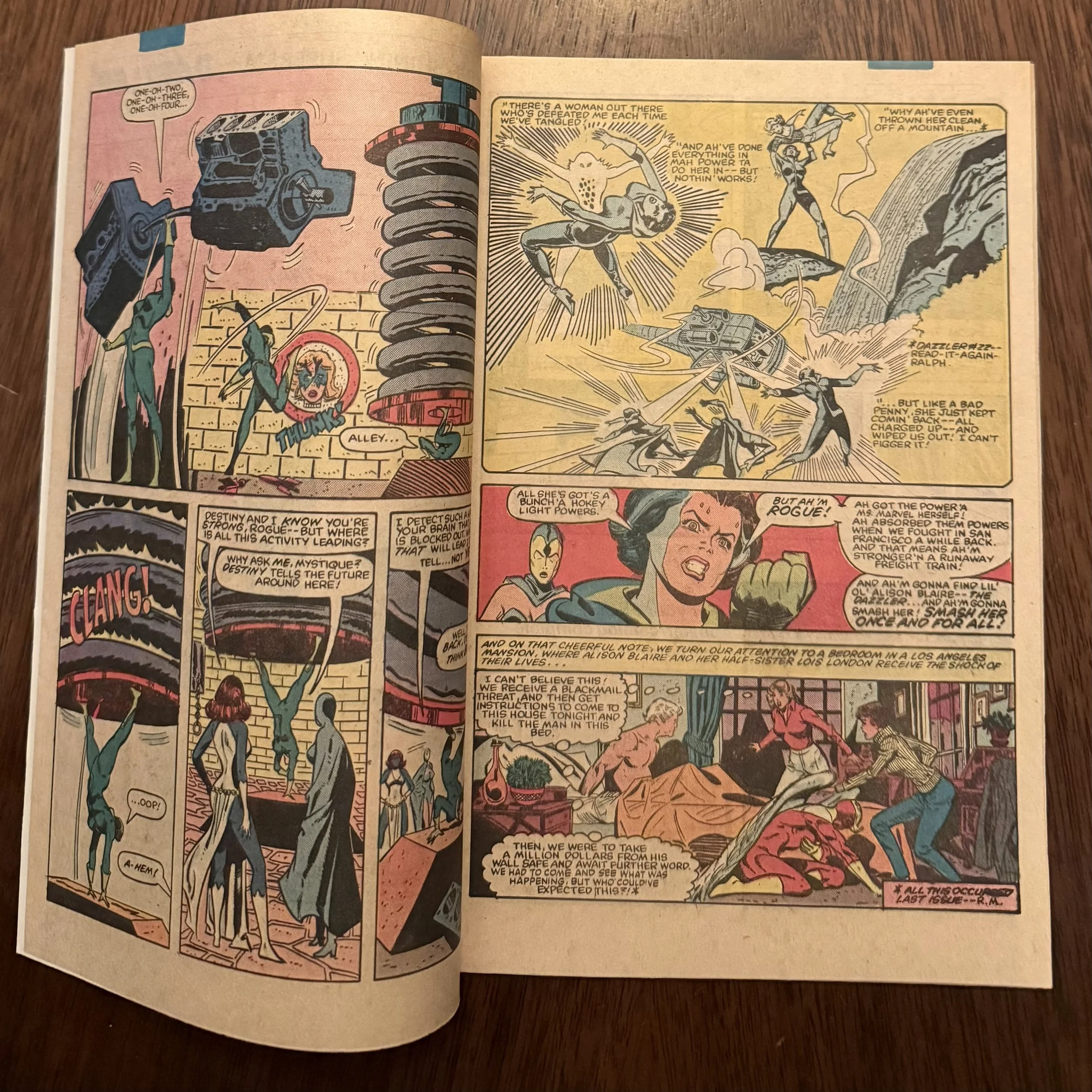
Where we get Andy Yanchus providing an excellent pink and blocky title letting on the first page and, we see the current mindset of Rogue. Who is training under under the watchful eye of her Mom’s, at thier family home, in Sutton Place, Manhattan. Raven and Irene can see, their daughter really has Alison on her mind, as she brakes the training equipment with her visage on it. Juiced up with Carol’s powers and teen age arch angst. Anna Marie is not subtle. Dazzler was right to have her in mind on the bus.
Back in LA, Lois’s Dad, Nick, is yes in bed…naked? and WWIII is alive, but not well. Nick’s double crossing investigator begins spilling the beans…when Ken and the cops show up. It seems everything is cleared up with lawyers and money. Nick, Ken, Lois and Aly are in a limo, safe and sound.
That is till this classic styled hijinks comic has Rogue ambush the car and rip it apart. Aly makes a run for it and then shows up in an even fancier car to run down rogue. Who grabs onto it and now we feel like we are in the pages of The Adventures of Tintin. When suddenly Rogue is flung into a tree and it feels like Archie, not the usual Patsy & Hedy. The battle is not complete without a Russ Heath plane, made famous by rip off pop artist Roy Lichtenstein. And Ally ends up defeating Anna Marie, but also saving her from being sucked into the jet engine.
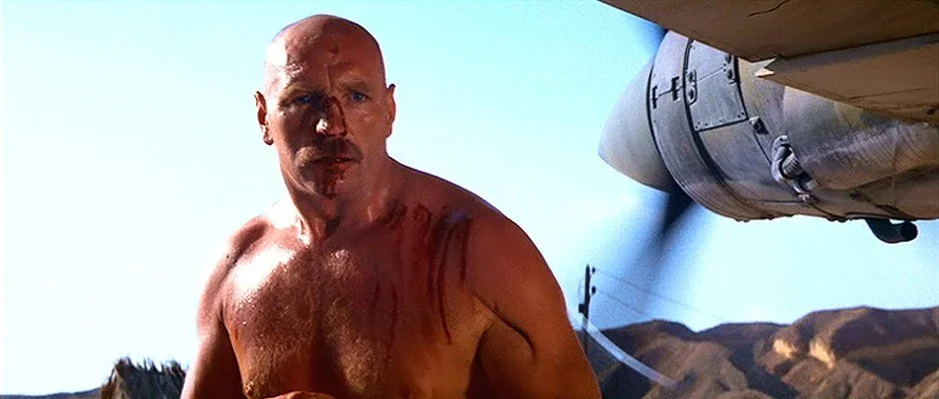
Not the same, but this is where my mind goes. Which works for a Marvel history full circle. We are left with Alison retuning to her family and “friends,” with an nocked the fuck out Rogue in her trunk.
Next: The Hand
